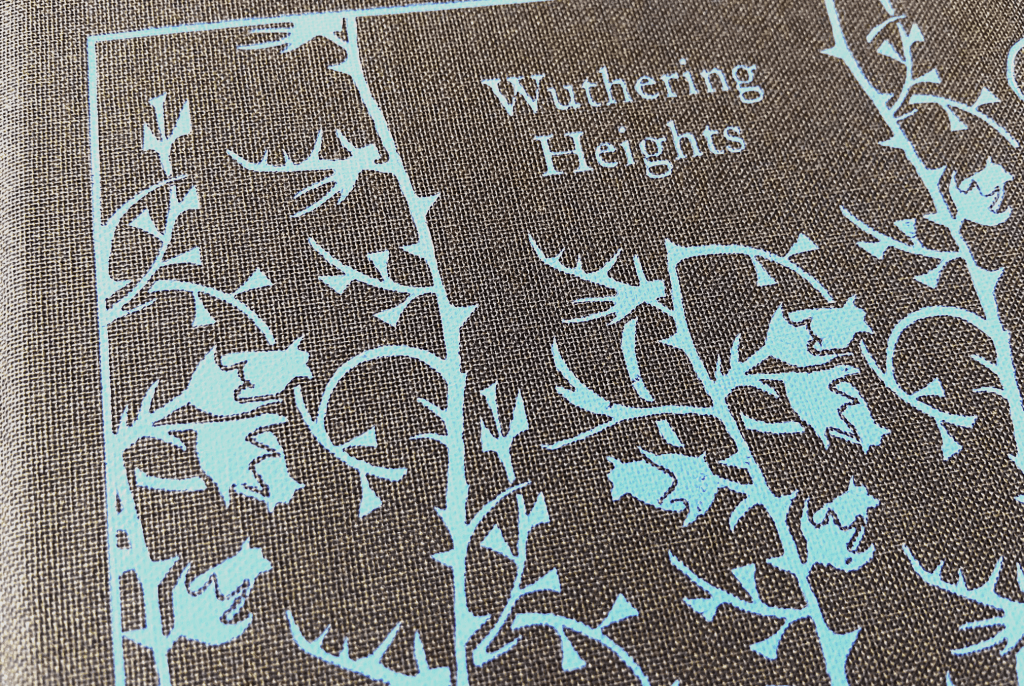
I read Brontë’s ‘Wuthering Heights’ over the span of one rainy weekend, curled up under two layers of blankets in February of 2021. It was still bleak late into the mornings and dark before the afternoon could even call itself “afternoon”. The heavy rainfall seemed the closest to fitting what I imagined to be ‘Wuthering Heights Weather’; all I was missing was the harsh winds battering against the side of my house.
I had somehow managed to evade this particular novel throughout my adolescence and my English literature degree, and I, not much one for the classics (or so I thought!), had never thought to pick it up as something for my own personal library.
It wasn’t until I stumbled upon a video during one of my late-night YouTube binges, lamenting my lack of inspiration to actually write anything substantial and wondering when the last time I actually enjoyed a book was, that I had a sudden change of heart in the matter and made the decision to read more. Particularly, I wanted to try and get into the “old stuff” before I treated myself any more of the short horror pieces my brain had been accustomed to ploughing through.
The video I discovered highlighted the amount of time that we really have to read in our lives – and it was about halfway through the video itself that I had the sudden panicked urge to buy a bunch of classics and start giving myself the education I felt (and still feel) secondary school failed me on.
I started with Jane Austen’s ‘Emma’ and after making my way slowly through that (another great classic, by the way – keep posted for another review on that sometime soon), I decided to go right for what has been referenced by many different people all throughout my life as one of the darkest, most romantic novels you can find in the classics section.
Here’s the thing: I think everything I thought I knew about this book before entering it was wrong. I have pop culture to blame.
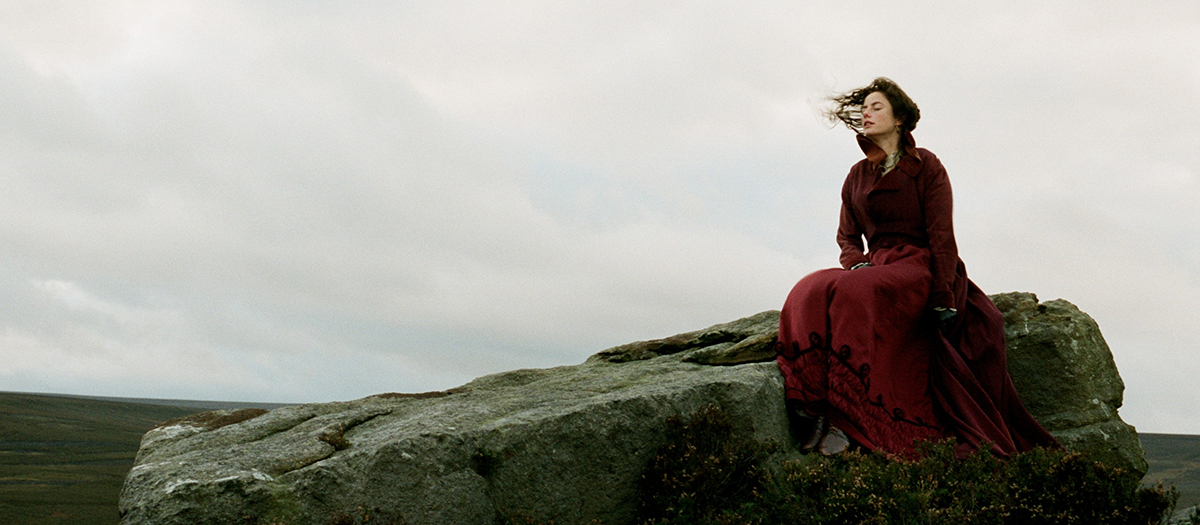
Misconceptions And The Mystique of Wuthering Heights
When I hear ‘Wuthering Heights’ come up in conversation it is always in reference to the “love story” of Heathcliff and Catherine. I hear about a love so great and so tragic that the novel is held up to this day as a masterpiece, and one of the great Victorian romances. I know why this is the case: They’re the central characters, their story is one of passion and melodrama and there are some quotes in this book that do sound awfully romantic (if you don’t look too closely at them). I think that this book is a masterpiece, but my personal reading of it is that it is more of a ghost story than a love story.
Maybe it’s just because I love ghost stories that this aspect of the novel stands out to me. My favourite stories all have some form of haunting central to the plot, or some kind of spectral presence that frames the narrative. I feel that we have a lot to learn from ghosts, and I certainly learned a lot from these ghosts.
For anyone who hasn’t read ‘Wuthering Heights’, now might be a good time to look away and return once you’ve picked up the novel for yourself, as there will be some spoilers following on from this point.
Going into the story mostly blind, I think, was the best way to do it. Aside from knowing it’s a romance and having the vague understanding that it’s generally considered quite depressing, the only other preconception I had was about Heathcliff himself. Played by actors such as Laurence Olivier, Tom Hardy (both white actors, in spite of how Heathcliff is described in the book – but we’ll talk about that another time) and James Howson in live action adaptations, I expected Heathcliff to be kind of a dreamboat, but any illusions I had about Heathcliff being the handsome, romantic protagonist the world has built him up to be quickly evaporated as I began the novel and found him, unexpectedly, making his first appearance as a haggard old man. Even more unexpectedly, we were seeing him from the perspective of someone completely unrelated to the events of the novel.
It turned out than rather watching a dark, almost cursed romance unfold, we would be following a different protagonist than I’d expected. The novel opens in the form of a diary entry of Mr Lockwood, Heathcliff’s new tenant.
I struggled at first to find my footing from this perspective, not expecting to be so far removed from what the novel is so famous for. I didn’t particularly like the narrator we had been given, a fact that didn’t change throughout the entire book, and I found it hard at times to follow along with a lot of the action in the early chapters. What really sold me on this book didn’t come until chapter three, and the appearance of Catherine, in another twist, appearing as some kind of ghost.
Again, perhaps my personal tastes have informed what I found so interesting about this book. I was immediately excited by the idea that this was not just a romance, but a romance gone terribly, awfully wrong. Here Brontë has introduced Heathcliff, old and bitter and surrounded by people that both fear and hate him, howling out of his window into a stormy night for his love, Catherine, to return to him, completely taking me out of any presumptions that this would be the sort of romance novel I had expected.

The appearance of first, Catherine’s diaries and then her spectre peering in through the windows of Wuthering Heights, Heathcliff’s home, led me to believe that perhaps our protagonist would read more of her journal entries and this way we would learn more about the story of their love – but this doesn’t happen either! In fact, our narrator gets his information on Heathcliff and Catherine from his servant at Thrushcross Grange, Nellie, who has known Heathcliff all his life.
It’s from Nellie’s narration, which we then hear through Mr Lockwood’s journal entries, where we hear what happened to Catherine and interestingly instead of the romance novel I expected, a conversation about class and race begins. This is where the book both thrilled me and lost me just a little bit.
As a literature student I have always been taught to dig a little deeper with my reading, to not think of the overarching story but to see the building blocks at the core of it. What I loved about this form of narration is that through Nellie’s eyes observing Catherine and Heathcliff allows us to see three different classes and the way that they interact with each other.
Nellie often injects her own perspectives and opinions, giving the serving class a voice. She watches Heathcliff as he is isolated as a child from Catherine and forced to live like a servant in the house he was adopted into, and she’s present through Catherine’s marriage to Linton, in the upper classes. Underneath all of the melodrama and the passion in the forefront of the novel, what really stood out in my mind was the way that the characters have been painted by Nellie through her experience viewing them from her position in the class ladder.
This kind of commentary really interests me, and so it was a treat to read this book in some ways. Among the hidden class struggle in the book, there was also a lot to learn about the cycle of abuse, human nature and the futility of revenge. All things I could go on about for pages and pages, but will save for another post another time, perhaps in a less conversational piece.
The reason that this perspective also lost me, though, was because what I had expected coming into this story, a dark, tragic romance, was really hard to grasp because of the removed manner of the narration. I never felt close enough to the action for any of it to really affect me. I cared to what extent I could care about the characters (all of them being painted in such a terrible light through Nellie’s version of events), but by removing the reader from the central characters not once, but twice, made it very hard to invest in what I was being told, or even believe it at all.
It’s clear that Nellie has her own motives for what she tells Mr Lockwood as she begins to paint a different Catherine (let’s call her Cathy #2!) in an angelic light, when we had already witnessed her behaving poorly through Lockwood’s narration before Nellie had been introduced, as a means to perhaps (unconfirmed) plant the idea that Mr Lockwood should marry Cathy #2 and help her escape the circumstances she is in in the novel. It’s also clear that Nellie doesn’t like or respect Catherine all that much. The only one she really does show respect to is Heathcliff, and that is more likely because he is actually alive and in a higher class than she is at the time of the narration, and also perhaps out of pity for what she witnessed him endure as a child.
I love an unreliable narrator as much as the next person, and there’s no way that we could have this level of commentary if we were reading from the perspective of Catherine or Heathcliff (who are also incredibly hard to like as people but absolutely wonderful to read about as characters) but I couldn’t help but wonder just how much I should really care for what I was reading at times.
So, after finishing the novel, I had to sit and really think to myself before I could start writing my post-novel notes, about whether or not I actually enjoyed the book.
I think I did. I think that I loved this book.
The only reason I can’t say this with certainty, is because everything I loved about it was born of the small things that made me want to put it down as I was reading.
I loved the complexity of the characters, I loved that no single person was beyond reproach, that they were human and selfish and at times (I’m looking at you, Heathcliff) downright evil. I loved them for that, but who are you supposed to root for in this story? What are you supposed to root for? If you don’t like a single person in the story, then why do you continue to read?
I loved the perspective that Nellie gives to the story, but I also hate it because the things I really wanted to know and to see were obscured from her. What was Catherine really seeing? Where was Heathcliff for all those years? Answers that only those two would know, their true feelings… Even more frustrating is that you could never tell what part of their story is actually true or just legend that has been spread by Nellie or others like her, who whispered about the strange, doomed romance of the characters.
At some points the cruelty of the book was enough to make me want to put it down, but it was gritty and intriguing and dark enough to entice me further. As Heathcliff enacts his revenge on those who wronged him you search for reasons to side with him after knowing what he has been through, but can never find it in you to justify the things that he does, mostly because no one is safe from the darkness that he intends to spread, even those innocent in Heathcliff’s suffering.
The whole time I felt myself searching for closure for each of the characters, but when it finally comes it is swift and sudden and I felt somehow robbed of the catharsis of it. After careful thought now, I think of the conclusion of this book as a storm passing. One minute there is darkness, a downpour, and the next it is simply gone. Nothing that I expected to happen in this book happened, and I both love it and hate it for dangling a romance in front of me and instead giving me a ghost story.
As far as books go, I think it’s a must-read. If not for what you expect of it, but for what you don’t. Revenge, abuse and grief are all major players in this novel, and I think there is some interesting (devastating) lessons to be learned from it.
What do you think? Comment below and share your thoughts. I’d love to hear what others thought of this strange and beautiful novel.

 MAISIE VIOLET WICKS